Inspiration – Exemplar Durazzo Book of Hours (Italian c 1500)
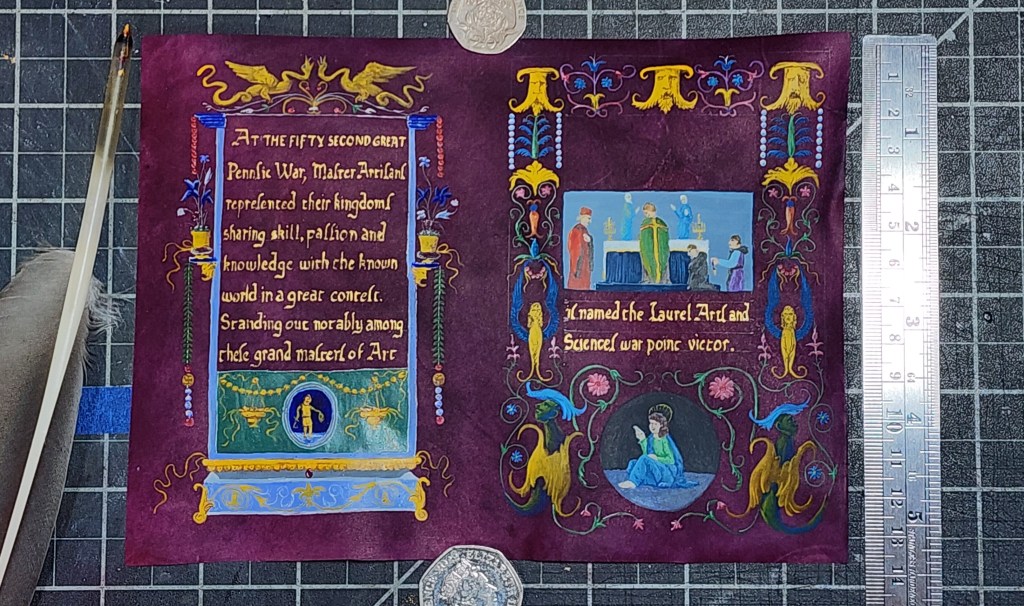
Materials: dyed hide vellum with chochneal, period and natural pigments, gum arabic binder, Calligraphy being suspended gold applied via quill.
Goals for assignment:
1) Dye vellum to close match Durazzo hours.
2) Attempt new style of illumination with mimic to keeping original size and dimensions
3) Attempt recreation of portraiture styles according to exemplar
Attributed to master Francesco di Marco Marmitta da Palma (c 1460-1505)
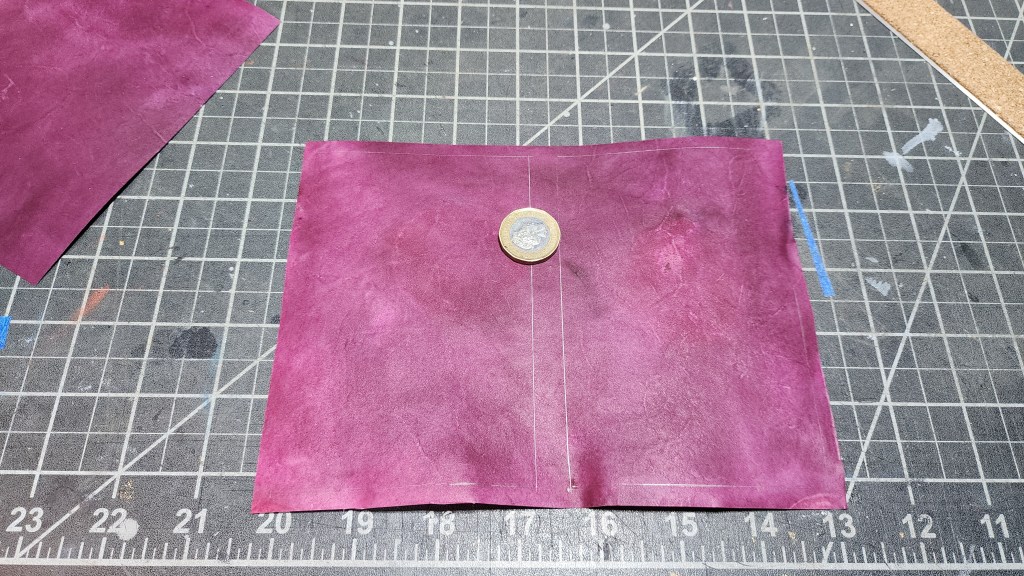
Original pages 143 X 96 mm, dyptich style presented here 143 X 192.
Much more research could be done on subject – most is garnered over short period of scroll assignment to arrival of base vellum to start. Patron very big fan of discovered exemplar, more likely on whiteboard for later commissions.
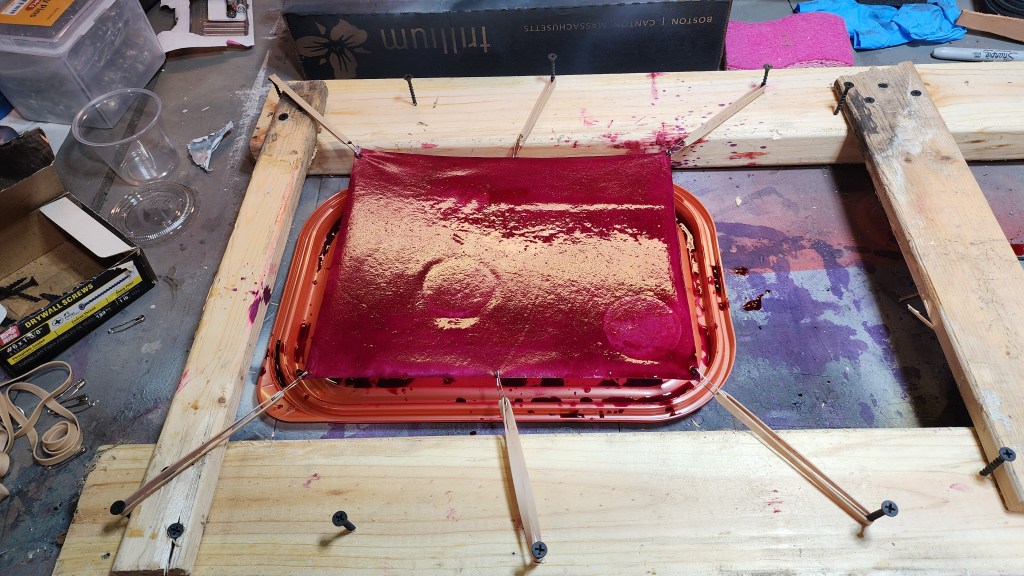
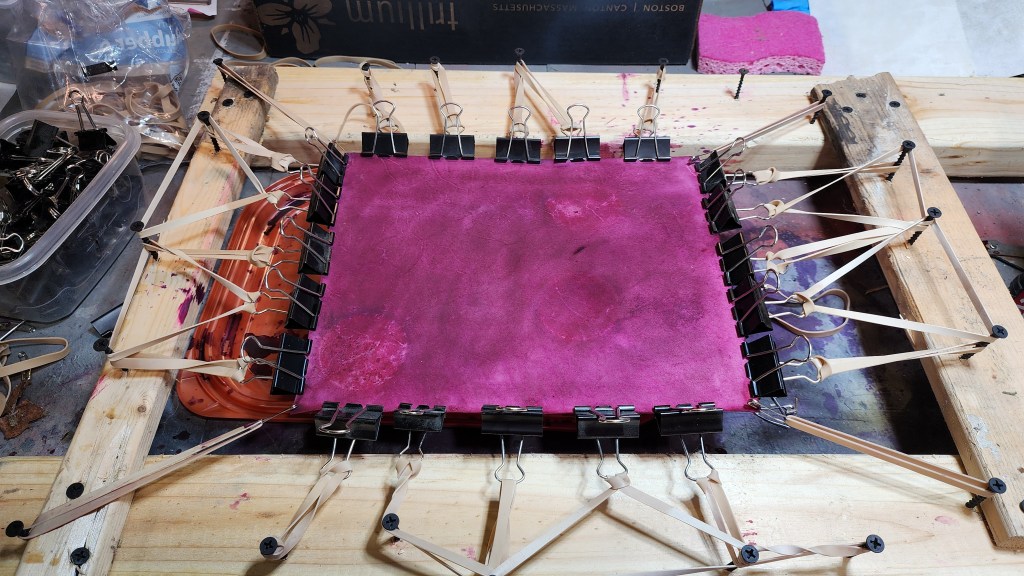
Original would have been orchil dyed vellum. Creation of orchil dye requires minimum of 4 weeks soaking in ammonia more like 6, and more time needed to distill into usable product. Given lead time constraint, choice made to use cochneal dye, while being a less lavish choice, was in-period opulent option and more rapidly created. The vellum for this example was dyed post-processing, in essence dying finished sheet. All these decisions are shortcuts chosen for time expediency given lead up to War.
Patron wife has orchil in hand, will be using in later project, as yet to be determined.
Few extant examples exist, dying process affects durability of the base vellum. Also choice made to still use technique as durability is measured in generations, which is sufficient for SCA award.
Results from dying: noted in final result, validation of mordant analysis for documents of period exemplar. Visible in result, areas where vellum held down by weight, mordant did not absorb into vellum evenly, and dye depth shows. Research indicates mordant and “painting” of purple dyed pages for period exemplars. Cochneal added with bits of oak leaves brings good purple-ish red. Further dye creation had added rust and sodium bicarbonate to ‘blue’ the hue – however choice made to stay with original batch as it has acceptable hue for desire.
Learnings for future:
- use mordant bath where immersion can be uniform, eliminate marks of weights
- Use Orchil dye for period-accurate hues.
Painting/Illumination:
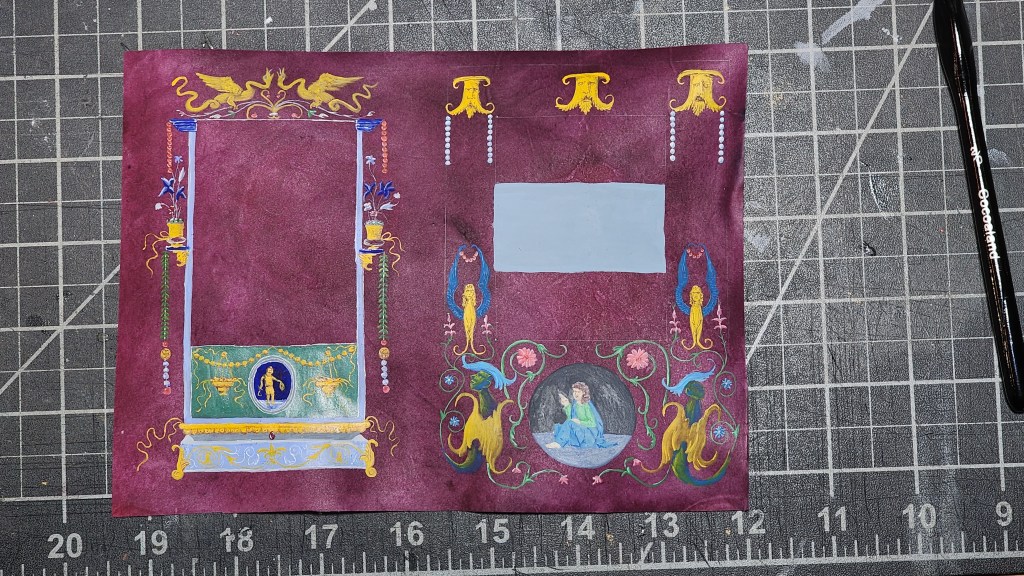
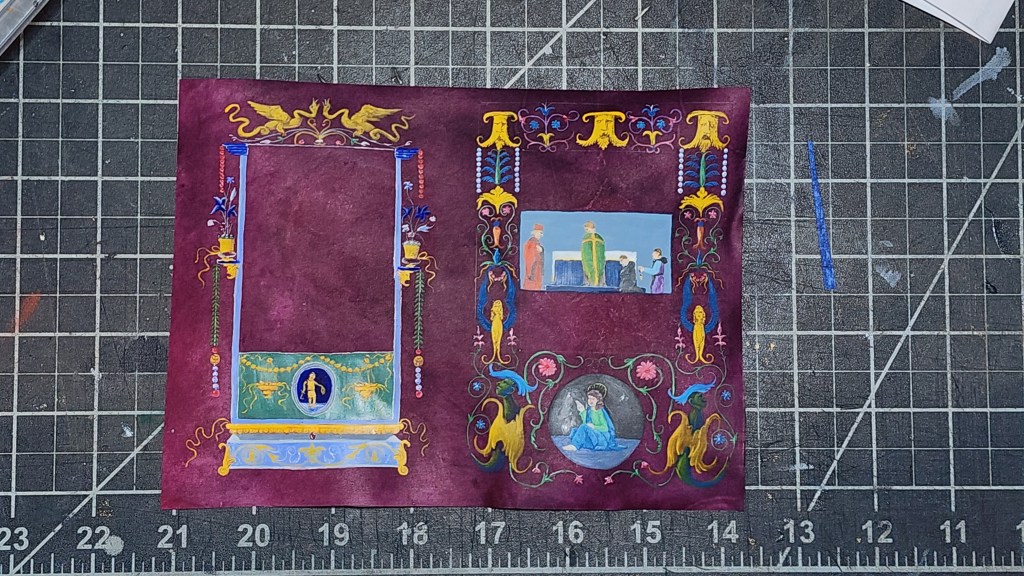
Francesco Marmitta was master of painting, gemwork and illumination. His style of period and location – italian – and stretch for artisan to imitate. Leveraging style and image keeping within reasonable skill limits of experience and technique.
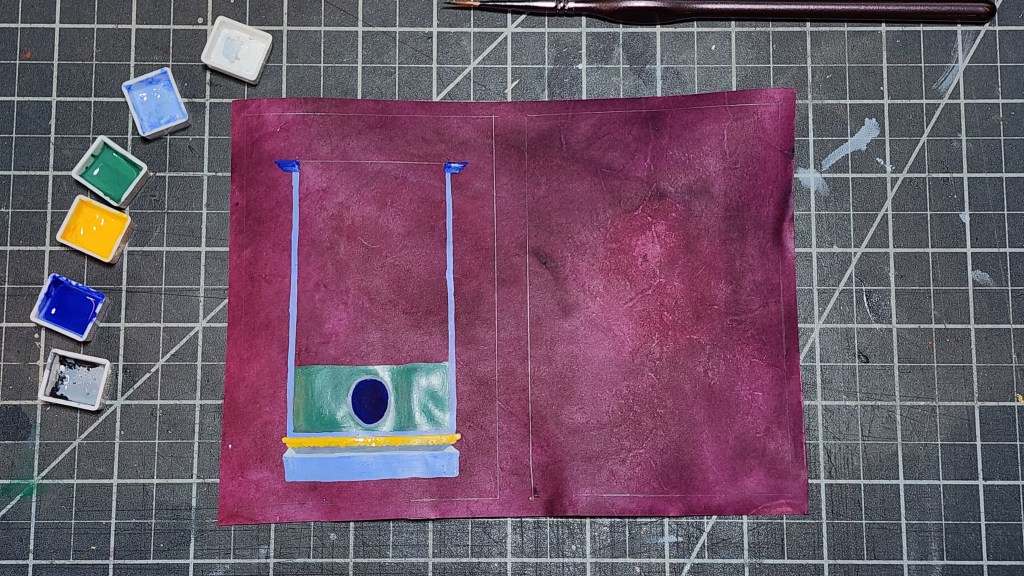
Style of exemplar is appropriate to period – italian. Gems, items, and realistic representation of subjects. Artist unfamiliar with style and techniques only a year on in practice. Spacing of verbiage require enough open space for calligraphy, limiting options for portrait. Choice made for inspiration specific for allowing limited practice and detailing on portrait technique.
Border requires shading, clear glass image, gems and jewels, appropriate to Italian style, flowers and creatures.
Pigments made from natural and period options. Patron stores somewhat limited on ‘pure’ period pigments, leveraging where can. Binder being Gum arabic. Functions much like watercolor, requiring multiple layer painting, and care so not reactivate previous work. Some toxic hues used: Vermillion (mercury), chrome yellow, white (lead), verdigris (copper).
Portrait work in scale challenging, especially in this italian period. More realistic representations appropriate for time period, pushing limits of artists expertise. Shading with hues work, pigment saturation in medium make blending difficult. In addition, multiple layers re-activate, requiring delicate touch to shading. Gems/Pearls reflective illusion another new technique, when being done in 1mm orbs, makes for very patient learning. Excited for more of this style.
Calligraphy:
Calligraphy hand unfamiliar, but practice proved hand is replicable. Noted missing guidelines in exemplar. Created overlay sheet to form window to guide strokes and maintain uniformity without use of guidelines. Flow of gold ink smooth between dips, technique with quill became similar to previous – dip, wipe on finger, 2 to 3 strokes, repeat. Clean tip every 5-10 cycles needed with gold pigment as would clump and interfere with flow.
Verbiage:
At the fifty second great Pennsic War, Master Artisans represented their Kingdoms sharing skill, passion and knowledge with the known world in a great contest. Standing out notably among these grand masters of Art, (NAME) is named the Laurel Arts and Sciences war point victor.







 Nikolai's Artwork